
HISTORICAL BACKGROUND
San Andrés is a historic parish located in the Guano Canton, in the central highlands of Ecuador, in Chimborazo Province.
It was founded on November 30, 1563, during Spanish colonial times.The parish covers a large area of 159.9 km², with both urban and rural zones.
The parish has deep Andean roots, with indigenous settlement before the Spanish arrival.
San Andrés became administratively part of the Guano Canton after 1845.
Historically, the town developed around agriculture, community organization, and religious life centered on the patron saint, Saint Andrew (San Andrés).

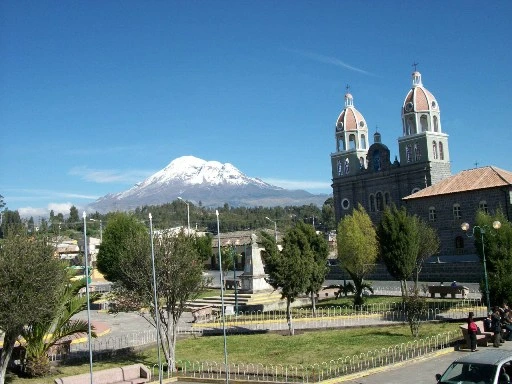
San Andrés Church
A historic stone church located in the central park of San Andrés.
Built using local stone by community mingas, started in 1916 and completed in the 1970s.
It preserves religious art and sacred objects.

Urbina Train Station
A historic railway point at high altitude, part of Ecuador’s early railway system. Now adapted as a small tourist lodge and cultural site.

Chimborazo Views & Outdoor Experiences
San Andrés reaches from 3,020 to 6,310 meters above sea level at Chimborazo slopes. Tourism includes trekking, horseback riding, and community-guided nature tours.
Culture and Daily Life
Daily life in San Andrés is rooted in a rural, agricultural economy and community interactions:

Most residents are engaged in agricultural production of crops such as alfalfa, maize, strawberries, blackberries, and tomatoes, with small-scale commercial activity supporting local livelihoods.

Artisan production of traditional textiles remains both a cultural expression and a modest economic activity, though competition from industrial goods has reduced market competitiveness.

Social services such as chapels and community houses are distributed across all hamlets and sectors, reflecting the communal orientation of daily life.
The parish development strategy emphasizes sustainable agricultural, artisanal, and tourism growth, supported by participatory local governance.